

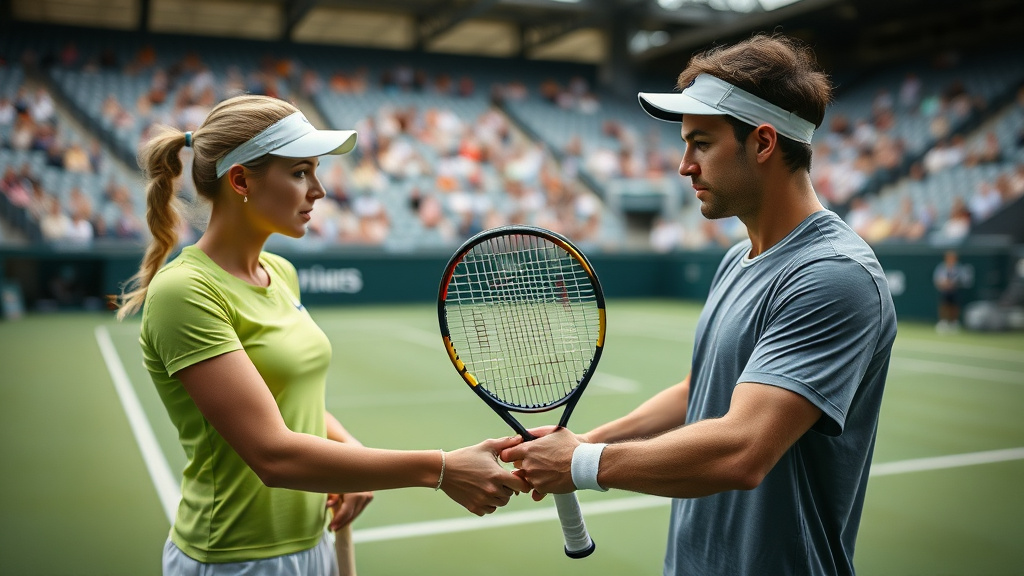
Grand Slam tournaments embody the highest level of professional tennis, where victors emerge and enduring legacies are created. Yet underneath the glittering facade lies an intense psychological battlefield. Elite players experience intense pressure, self-doubt, and anxiety about defeat that can compromise even the most technically skilled athletes. This article examines how mental toughness training—including visualization techniques, present-moment awareness, and cognitive reframing techniques—enables tennis professionals to manage their emotional responses, sustain concentration under extreme conditions, and ultimately achieve peak performance when it matters most.
Exploring Mental Toughness in Elite Tennis Competition
Building Psychological Strength in the Sport of Tennis
Mental resilience in professional tennis means an athlete’s capacity to sustain focus, composure, and confidence when confronting adversity during competitive matches. It encompasses the psychological strength to bounce back from defeats, such as dropping an important set or confronting a strong competitor. For tennis professionals, resilience is not merely about physical endurance but about cultivating an steadfast psychological strength that allows players to manage the mental turbulence intrinsic to professional sports. This psychological attribute distinguishes champions from contenders.
The requirements of significant tournaments intensify the necessity for mental resilience substantially. Players participate across numerous contests lasting several weeks, each requiring peak physical and psychological performance. The mounting pressure of traveling, media scrutiny, and demands by sponsors and supporters generates a high-pressure setting. Psychological strength allows professionals to compartmentalize distractions, keep focus during losing streaks, and preserve drive through grueling tournaments. Without this psychological foundation, even more skilled players may crumble under pressure.
Research in sports psychology has consistently demonstrated that mental resilience is a learnable ability rather than an innate trait. Athletes can cultivate and improve their resilience through structured training and purposeful programs. Mental training programs have emerged as key parts of professional tennis development, together with physical conditioning and technical coaching. By understanding resilience as a learnable capacity, players take control of their psychological performance and can strategically enhance their competitive standing.
The Psychological Demands of Major Tournaments
Major championships introduce distinct mental pressures that differentiate them from regular tour events. The heightened public attention, historical significance, and career-defining implications create unprecedented pressure. Players must navigate intensified worry, perfectionism, and concern about letting down themselves and their support networks. Additionally, the extended tournament format necessitates sustained mental energy and emotional regulation across several rounds, amplifying mental exhaustion and risk of performance deterioration.
The stakes characteristic of elite tennis tournaments amplify lack of confidence and catastrophic thinking patterns. Players may fixate on feared results rather than emphasizing present-moment performance. This psychological breakdown can result in attention deficits, impulsive decision-making, and emotional volatility during high-pressure situations. Grasping these cognitive processes is vital for developing effective psychological coping mechanisms that confront the specific pressures characteristic of the sport’s highest-level events.
Key Approaches for Building Psychological Resilience
Mental resilience training includes a variety of evidence-based techniques intended to build emotional strength in high-pressure environments. These methods help professional tennis players develop emotional regulation, stay concentrated during key situations, and convert nervousness into winning edge. By consistently working on these techniques during practice and matches, athletes develop neural pathways that support best results when facing Grand Slam pressures and title-deciding situations.
Visual Representation and Mental Imagery
Visualizing performance includes mentally practicing successful match scenarios prior to competition on court. Elite tennis players use comprehensive visualization to replicate competitive pressure, opponent strategies, and successful results. This technique stimulates the same neural pathways as physical practice, enhancing confidence and tactical decisions. By repeatedly visualizing successful serves, crucial break points, and tournament victories, professionals create cognitive maps that direct their performance during real competition.
Advanced visual preparation goes further than simple success imagery to encompass adversity scenarios. Players mentally rehearse recovering from setbacks, managing frustration, and executing strategies when down in sets. This preparation strengthens mental toughness by familiarizing the mind with challenges before they arise. When players face actual high-pressure moments during major championships, their brains detect established patterns, reducing anxiety and enabling poised, strategic reactions.
Managing Stress and Breathing Exercises
Controlled breathing techniques deliver rapid nervous system control in high-pressure situations. Box breathing—inhaling for four counts, pausing for four counts, exhaling for four—activates the parasympathetic nervous system, reducing the acute stress reaction caused by competitive tension. Tennis professionals perform these techniques during point breaks, when changing ends, and ahead of critical serves, creating a mobile coping strategy that sustains ideal focus levels across entire matches.
Progressive muscle relaxation and mindfulness meditation for stress complement breathing work by progressively alleviating physical tension and mental clutter. Players learn to pinpoint stress manifestations—shoulder tightness, shallow breathing, racing thoughts—and deploy targeted interventions. Frequent practice of these techniques during training builds automaticity, enabling athletes to tap into calming strategies instinctively when facing elite-level competition demands, maintaining the mental clarity essential for championship performance.
Establishing Resilience Building Frameworks
Tennis bodies and coaching teams internationally are progressively recognizing the essential value of incorporating mental resilience training into their skill-building curricula. These detailed frameworks integrate research-backed mental strategies with tennis-centered contexts, ensuring players create practical coping mechanisms designed for championship environments. Leading tennis academies now dedicate substantial resources to mental conditioning, accepting that psychological strength significantly impacts competitive success and enduring career viability.
The execution phase starts with personalized evaluations identifying each player’s unique mental weaknesses and capabilities. Expert sports psychology professionals collaborate with coaching staff to design personalized training protocols addressing distinct performance obstacles. These interventions generally extend over several months, including ongoing sessions that steadily build in challenge and intricacy. Players learn to recognize stressful situations, build effective responses, and build confidence through repeated exposure with high-pressure simulations during practice sessions.
- Set up baseline psychological assessments for all athletes
- Hold weekly mindfulness and meditation practice sessions
- Recreate competitive pressure situations during training environments
- Monitor progress through performance metrics and player feedback
- Provide regular support from qualified mental performance specialists
Successful implementation necessitates buy-in from entire organizational structures, encompassing players, coaches, auxiliary personnel, and administrators. Ongoing assessment and adjustment of coaching initiatives ensure they stay aligned with evolving needs to changing competitive requirements. Organizations investing in integrated mental performance programs consistently produce athletes who excel in high-pressure situations, exhibiting documented progress in competitive outcomes and overall career longevity.
